

TECHNOLOGY · STAFF CORRESPONDENT
PM Modi Challenges India Inc Over Jobs and Salary Growth After Tax Cuts
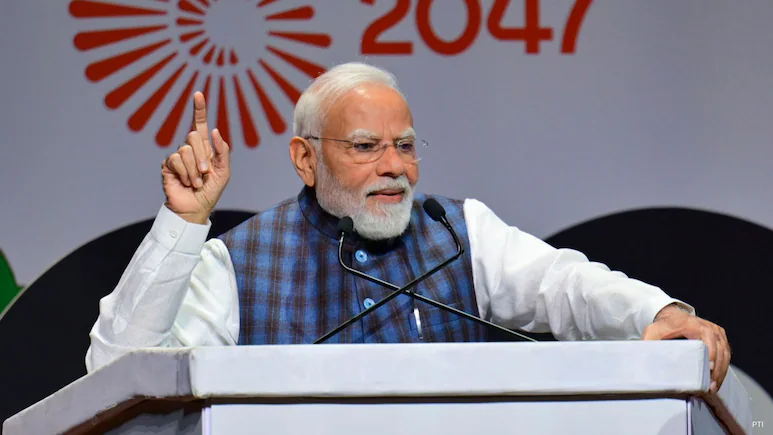
Prime Minister Narendra Modi has challenged India’s corporate leaders to explain why reductions in corporate and personal income taxes have not translated into more jobs and higher salaries for private-sector employees. Addressing the annual gathering of the Federation of Indian Chambers of Commerce and Industry (FICCI) in New Delhi on November 19, 2026, he urged businesses to share greater responsibility for economic growth instead of relying primarily on government initiatives.
Modi pointed out that his government had reduced the basic corporate tax rate from 30% to 22% and introduced income tax relief for individuals earning up to ₹12 lakh annually. He questioned whether companies had responded to these measures by expanding their workforces or increasing employee compensation.
Modi Asks Businesses to Deliver More Jobs and Better Salaries
The prime minister said tax concessions were intended to encourage economic activity, investment and consumption, but argued that the benefits should extend beyond businesses to ordinary workers.
He questioned industry leaders over whether they had increased hiring or raised salaries following the government’s tax relief measures. Modi suggested that companies were expecting the government to take the lead on economic expansion without making sufficient commitments of their own.
He also criticised what he described as an attitude in which businesses continued to demand additional concessions while offering limited evidence of corresponding improvements for employees.
According to Modi, companies must become active partners in the country’s growth by creating employment opportunities, improving wages and investing in their future workforce.
His remarks placed the spotlight on a key economic question: whether tax reductions alone can generate the desired increase in private investment, job creation and household incomes.
Income Tax Relief Expected to Boost Consumer Demand
Modi said the exemption of annual income up to ₹12 lakh under the new tax regime had increased the purchasing power of eligible taxpayers. He argued that the additional disposable income should help stimulate consumer demand and encourage businesses to expand production.
The government’s approach rests partly on the expectation that people with more money available after taxes will spend more on goods and services, supporting economic activity across industries.
However, the prime minister indicated that this process required companies to respond to stronger demand by expanding their operations and creating employment rather than simply benefiting from tax concessions.
He also stressed the importance of respecting farmers, taxpayers, small businesses, entrepreneurs and wealth creators, saying their contributions were essential to national progress.
Indian Companies Told to Compete Globally
Beyond employment and salaries, Modi urged Indian businesses to improve product quality and strengthen their international competitiveness.
He cautioned industry leaders against treating India’s domestic market as a guaranteed source of sales. Instead, he said, companies should use their position in the Indian market as a foundation for competing with international manufacturers.
The prime minister also criticised the practice of marketing certain goods as “export quality”, suggesting that Indian consumers deserved products that met high standards regardless of their destination.
His message was that domestic customers should receive the same quality of products as international buyers, while Indian manufacturers should focus on innovation, reliability and global standards.
Modi Urges Industry to Capitalise on Trade Agreements
The prime minister also called on business leaders to make greater use of India’s trade agreements with other countries. He said these arrangements opened access to major international markets and created opportunities for Indian companies to expand exports.
Modi questioned whether industry bodies had developed concrete plans to take advantage of the agreements or whether businesses expected the government to guide every step of the process.
He urged companies to evaluate the opportunities created by improved market access and turn them into long-term commercial gains.
The remarks reinforced the government’s broader emphasis on self-reliance, investment and export-led growth.
Greater Responsibility for India’s Corporate Sector
Modi’s address delivered a clear message to corporate India: government incentives must be matched by private-sector action.
While tax relief can improve business conditions and support consumption, the prime minister argued that companies must demonstrate tangible benefits through better employment opportunities, higher wages, improved products and stronger investment.
His challenge also highlighted the need to connect economic growth with improvements in workers’ incomes and living standards. The extent to which businesses respond to these expectations will remain an important measure of whether policy incentives translate into broader economic gains.
WeeklyHunt editorial note: This is independent editorial coverage verified by our journalism desk.