

TECHNOLOGY · STAFF CORRESPONDENT
Amazon and Google Set to Own Nearly 30% of Anthropic After Its IPO
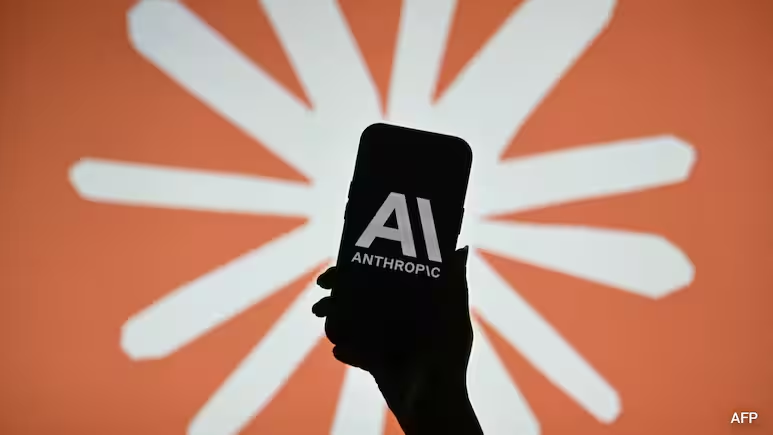
Amazon and Google are poised to hold a combined stake of more than 28% in artificial intelligence company Anthropic following its initial public offering (IPO), highlighting the growing financial ties between major technology companies and the AI businesses they are also competing against.
According to Anthropic’s updated IPO disclosures, Amazon is expected to own approximately 14.7% of the company, while Google will hold around 13.7%. Together, their holdings represent 28.4% of Anthropic’s outstanding capital stock after the IPO and an accompanying private share sale.
The investments underline how two of the world’s largest cloud computing providers have become important financial backers of the company behind the Claude family of AI models. At the same time, both companies operate their own AI services and compete for customers in the rapidly expanding generative AI market.
Amazon’s Stake Could Have Been Even Larger
Amazon’s investment in Anthropic began in 2023 and continued through subsequent funding arrangements. In addition to purchasing equity, the company provided financing through convertible promissory notes that can be exchanged for shares under specified conditions.
For the IPO, Amazon has chosen to convert only a portion of its outstanding notes into shares, leaving its ownership at approximately 14.7%.
The company could potentially increase its stake further if it converted all the remaining eligible notes and lifted the applicable ownership restriction. Under that scenario, Amazon’s ownership could rise to approximately 23.8%, based on the figures in Anthropic’s filing.
However, Amazon has elected not to waive the relevant ownership cap for the offering. The decision allows it to retain a substantial economic interest without immediately expanding its shareholding to the maximum possible level.
The investment could prove valuable if Anthropic's valuation continues to rise, although the eventual financial return will depend on the company's market performance and the terms governing the shares.
Google’s Investment Includes a Major Share Purchase
Google’s stake combines shares linked to earlier investment agreements and a fresh purchase through a private placement accompanying the IPO.
As part of a wider $26 billion private placement, several major technology companies have agreed to buy Anthropic’s non-voting shares. Google and Nvidia are each committing $10 billion, while other participants include Microsoft, AMD, Broadcom, Micron and TSMC Partners.
Google’s resulting holding is expected to represent approximately 13.7% of Anthropic’s total capital stock. Its investment reflects the importance of Claude to the broader AI ecosystem, even as Google continues developing its own Gemini models.
The arrangement also gives Google exposure to Anthropic’s potential growth without requiring it to take direct voting control of the company.
Why Amazon and Google Hold Non-Voting Shares
A key feature of Anthropic’s ownership structure is that the shares held by Amazon and Google do not carry ordinary voting rights.
These holdings are classified as Class N shares. They provide economic benefits, including rights to dividends and liquidation proceeds, but do not give the two technology companies the same voting power as holders of Class A shares.
Anthropic’s founders retain control through a special governance arrangement involving a separate class of shares. This structure allows strategic investors to own substantial portions of the business while limiting their direct influence over corporate decisions.
The arrangement is significant because both Amazon and Google are not only investors but also cloud service providers, distribution partners and competitors in the AI market.
Anthropic’s Cloud Commitments Strengthen the Partnership
The relationship between Anthropic and its major investors extends beyond share ownership.
Anthropic relies on cloud infrastructure to train and operate its AI models, while Amazon Web Services and Google Cloud provide computing capacity and help distribute Claude to business customers.
The company's long-term agreements involve substantial spending commitments. Anthropic has committed more than $100 billion to Amazon's cloud services over the coming decade, while its agreement with Google also involves a commitment exceeding $100 billion over several years.
These arrangements create a mutually beneficial relationship: Anthropic gains access to the computing infrastructure needed to expand its AI operations, while its cloud partners earn revenue from hosting and distributing its products.
Potential Conflicts Between Investors and Competitors
Despite the commercial advantages, the overlapping relationships also create risks.
Amazon and Google are developing their own AI models and services, placing them in direct competition with Anthropic for enterprise customers and developer adoption. Their positions as investors and cloud providers could create questions about access to computing resources, commercial information and the treatment of competing AI businesses.
Anthropic has acknowledged these potential conflicts in its public disclosures. Dependence on a relatively small number of infrastructure providers could also expose the company to operational challenges if commercial terms change or access to computing capacity becomes constrained.
For investors, these issues are important considerations when assessing the company's long-term prospects.
What the Ownership Structure Means for the AI Industry
Amazon and Google's combined stake illustrates how the economics of artificial intelligence increasingly connect model developers with the technology companies supplying their infrastructure.
Anthropic benefits from financial backing, cloud capacity and access to established business customers. Its investors, meanwhile, gain exposure to the growth of Claude while earning revenue through infrastructure and distribution services.
However, a substantial ownership stake does not automatically translate into control, particularly when the shares carry no voting rights.
The long-term outcome will depend on Anthropic's ability to expand its customer base, generate sustainable revenue and manage its dependence on major technology partners. Its public listing will also give investors a clearer view of how the company balances rapid growth, substantial infrastructure costs and competition in the global AI market.
WeeklyHunt editorial note: This is independent editorial coverage verified by our journalism desk.